
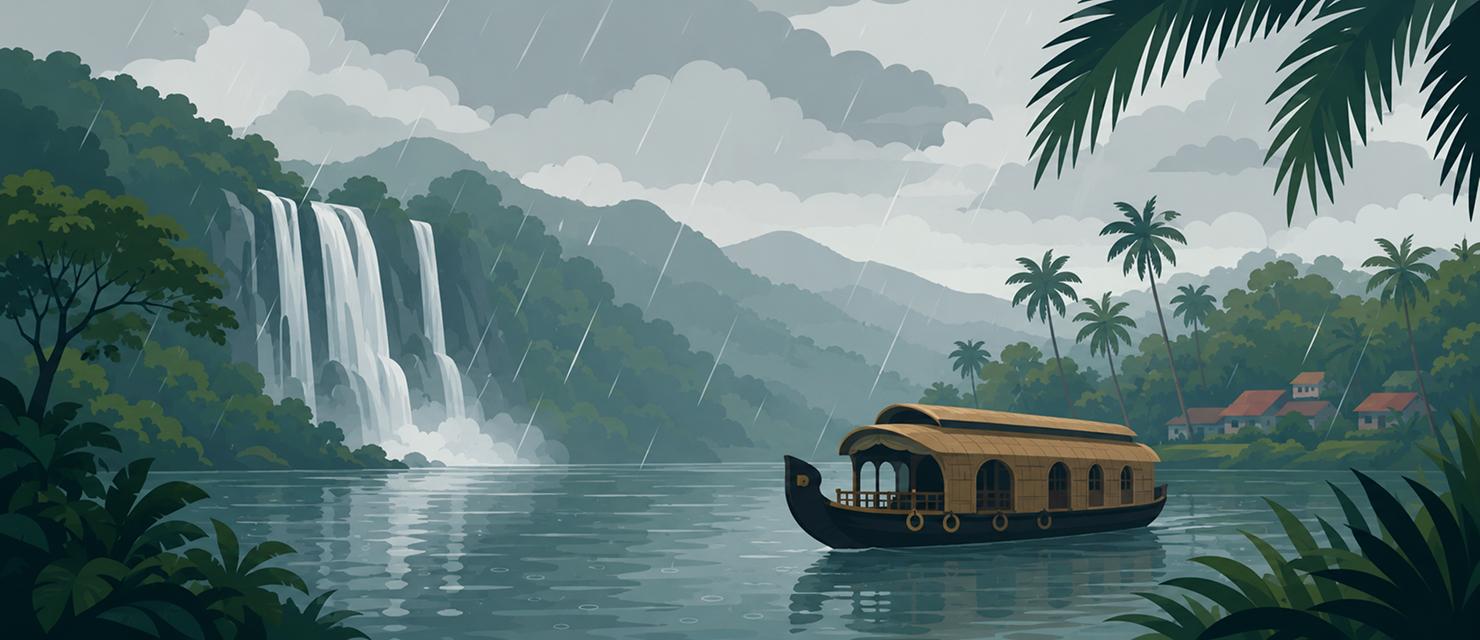
Monsoon season gets treated as the time to avoid traveling in India, but several of the country’s most striking landscapes exist precisely because of that rain, and disappear or fade significantly once the dry season arrives. Skipping monsoon entirely means skipping the exact conditions that make certain places worth visiting in the first place.
Kerala: the backwaters at their fullest
Kerala’s famous backwaters, the network of lagoons and canals running along the coast, are at their most dramatic during monsoon, when the rain feeds the waterways to their fullest and the surrounding landscape turns a genuinely deep, saturated green that simply doesn’t exist in the dry months. Kerala also markets its Ayurvedic wellness treatments specifically around monsoon season, since the humidity is considered ideal for the body to absorb the herbal oils used in traditional treatments, making this one of the few destinations where the rainy season is the recommended time to visit rather than a compromise.
Kerala’s Ayurvedic treatment centers specifically recommend monsoon season for wellness tourism, citing the humidity as ideal for the skin’s absorption of traditional herbal oils.
Meghalaya: among the wettest places on Earth, by design
Meghalaya, home to Cherrapunji and Mawsynram, receives some of the highest annual rainfall totals recorded anywhere on the planet, and the region’s living root bridges, waterfalls, and dramatic valley views are direct products of that rainfall. Visiting Meghalaya outside monsoon season means seeing a much reduced version of the same waterfalls that draw people there in the first place. The wettest months are the ones that actually deliver what the destination is known for.
Why “avoid the rain” is the wrong framing for some trips
The instinct to plan travel around avoiding rain makes sense for destinations where rain is simply an inconvenience. It makes considerably less sense for destinations where the rain is the actual attraction. A trip to Meghalaya’s waterfalls during the dry season, or a Kerala backwater cruise outside monsoon, isn’t a safer version of the same trip. It’s a different, less impressive trip to the same place.
Goa and the western coast: greener after the rain, not during the worst of it
Goa takes a different approach to monsoon travel than Kerala or Meghalaya. The peak monsoon months, typically July, bring intense, near-continuous rain and rough seas that make beach activities and much of the coastal tourism infrastructure impractical. But the tail end of the season, as rainfall tapers through September, transforms the state’s usually dry, brown landscape into a lush green that simply doesn’t exist during the peak dry tourist season from November through February. Travelers timing a Goa trip for this post-monsoon window get a genuinely different version of the state, without the crowds of peak season and without the heaviest rain of July and August.
This distinction matters because “monsoon travel” isn’t a single strategy applied uniformly across destinations. It means choosing not just where to go, but which part of the monsoon’s multi-month arc actually suits that specific place.
What a monsoon-season trip still needs to plan around
None of this means monsoon travel requires no planning. Rainfall intensity varies significantly by day and by specific location even within a single region during monsoon season, and knowing whether a particular week will bring steady, moderate rain or intense, travel-disrupting downpours makes a real difference for itinerary planning.
RainViewer’s 7-day forecast shows rainfall patterns for any destination, helping travelers plan the specific days and locations within a monsoon trip rather than avoiding the season entirely.
Plan around the rain, not away from it
The best monsoon-season trips in India work with the rain rather than trying to dodge it, choosing destinations where the rainfall is the point and planning the specific days around realistic forecasts rather than guessing.
RainViewer’s 7-day forecast shows rainfall patterns for any destination in advance, making it possible to plan a monsoon-season trip around the days and locations where the rain will actually deliver the experience worth traveling for.



 RainViewer
