
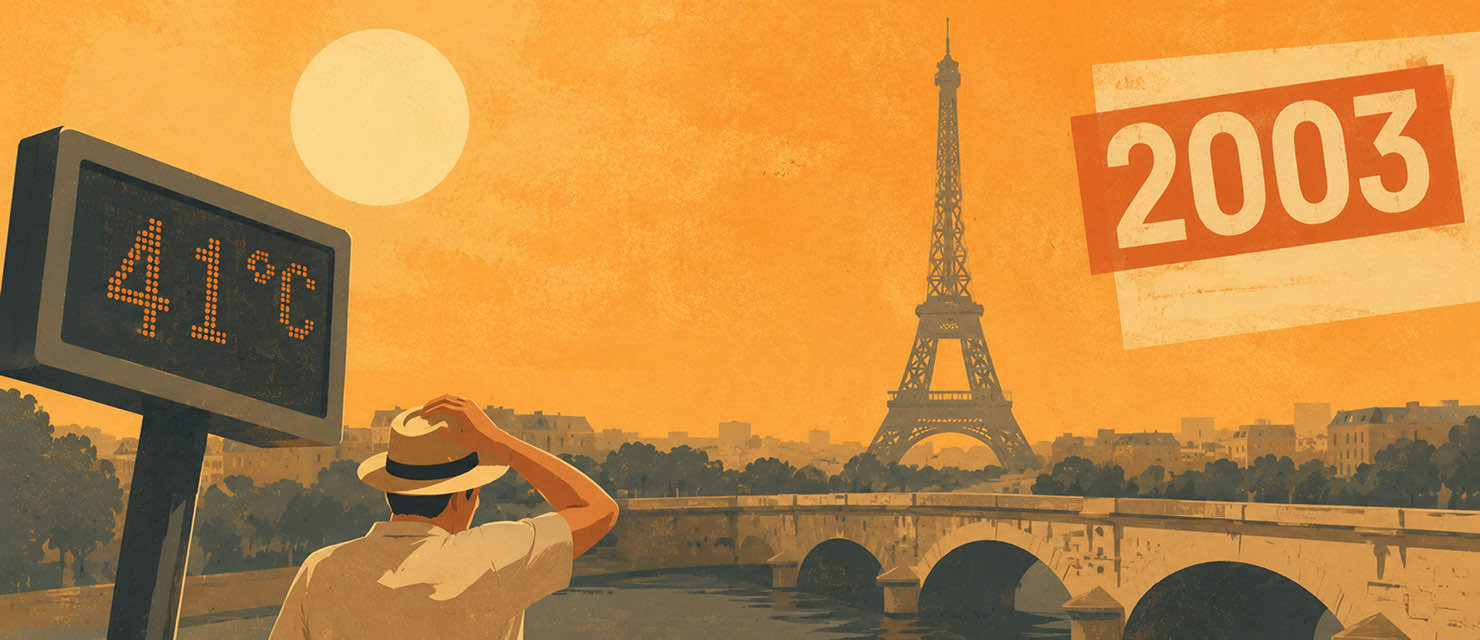
Between 1 and 20 August 2003, France recorded 41,621 deaths when 26,819 were expected, which is 14,802 excess deaths, according to the Senate report. The 2003 heat wave remains the episode that changed how France prepares for heat.
What happened in August 2003
Mortality began rising around 4 August, climbed rapidly until 12 August, then fell back from the 13th and returned to normal around the 19th. On 12 August, France counted 2,197 excess deaths in a single day.
An excess death is the difference between observed deaths and the deaths that were expected for the period. From 1 to 20 August 2003, France expected 26,819 deaths and counted 41,621. The difference, 14,802, is the toll of the heat wave.
An episode on that scale hits first the people who cannot cool down. Unventilated rooms reached 41°C (106°F), sometimes 45°C (113°F), according to the Senate.
In August 2003, France recorded 14,802 excess deaths over 20 days, peaking at 2,197 excess deaths on 12 August.
The nights offered no relief
Daytime heat alone does not explain the mortality. In the Paris region, minimum temperatures stayed above 25.5°C (78°F) two nights running. A night that does not cool down stops the body from recovering, and most French homes are not air conditioned.
That is why the Météo-France definition of a canicule now includes a night-time minimum threshold, and not only a daytime peak.
Who was most exposed
The Senate estimated that around one million dependent, frail or seriously ill elderly people were exposed to serious risk. The victims were mostly elderly, often living alone. Those who lived surrounded by family, or in a care home, fared better.
The same report describes a late and disorganised response, with care staff having to improvise emergency measures.
What changed after 2003
The following year, in 2004, France introduced the national heat plan, built on national forecasting and a national alert system. The heat-wave vigilance system in use today was born out of that crisis.
How that system works now is covered in orange heat-wave vigilance: how it works .
Following the heat today
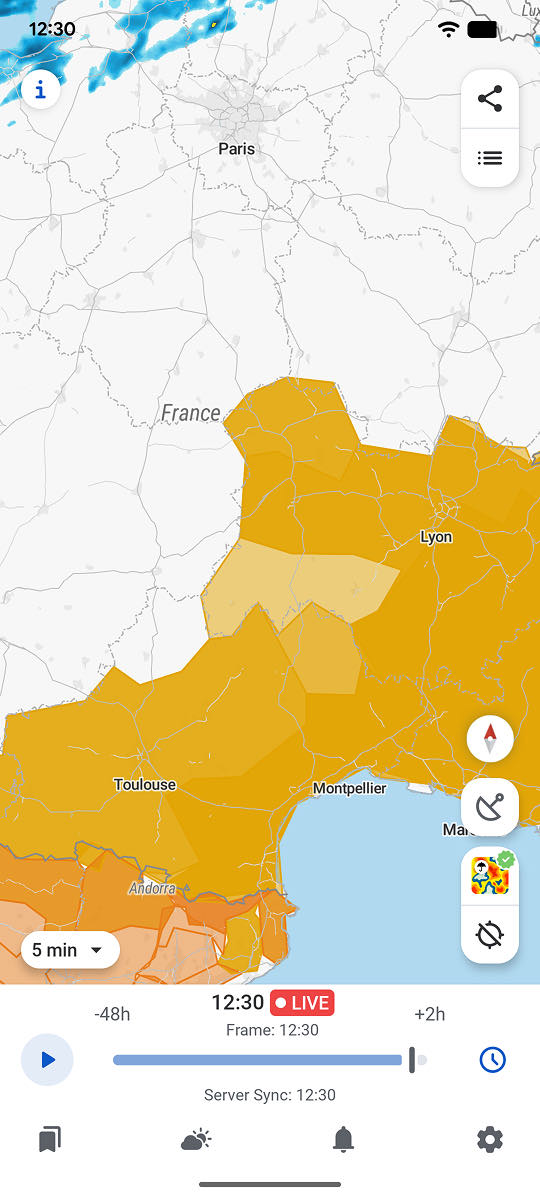
A vigilance level states the risk for a department. It does not say what temperature is forecast where you are over the next three days.
RainViewer shows official weather alerts from national weather services along with the Temperature layer, which gives surface temperature forecasts up to 72 hours ahead. A tap on the map shows the air temperature at that spot.
The RainViewer Temperature layer shows surface temperature forecasts up to 72 hours ahead, and a tap on the map gives the air temperature at that spot.
Watch the heat before it becomes official
The 2003 heat wave showed that heat is also measured at night, place by place. Following the three-day temperature forecast for each place that matters is a simple habit.



 RainViewer
