
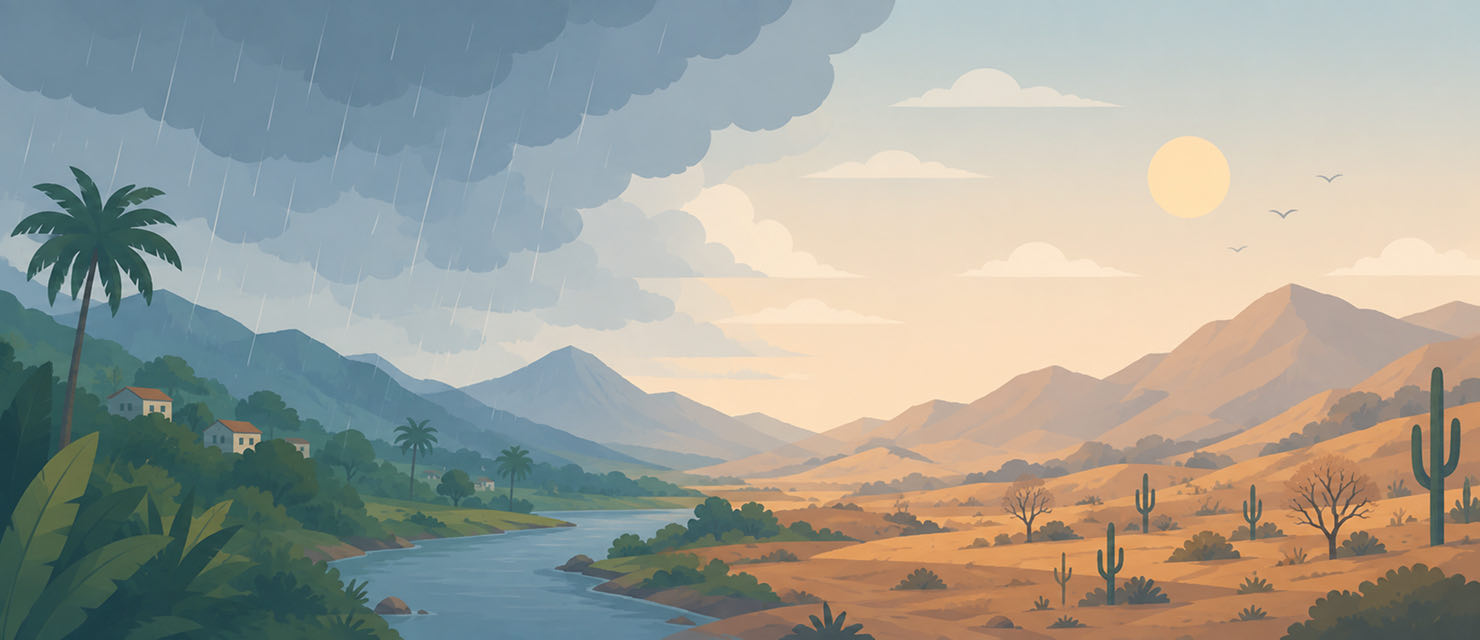
According to the Servicio Meteorologico Nacional, the rainy season in Mexico ends on 30 November. In practice, the rain fades much earlier across most of the country, and in other regions it carries on well past that date.
Two different dates: the official one and the one you feel
The official date coincides with the close of the cyclone season. Conagua states that the season ends on 30 November in both the Pacific and the Atlantic, and notes that it does not rule out systems outside those dates.
The date you feel is another matter. Most of the country has its rainy season from June to mid-October, and gets far less rain the rest of the year. In Mexico City, February averages only 5 millimetres (0.2 inches) while July passes 160 millimetres (6.3 inches). As October runs on, the difference is obvious on the street long before 30 November.
The rain has two peaks and a pause
The Servicio Meteorologico Nacional describes the season as a period of about six months, from late May to late November. Rainfall reaches maximum totals between May and June, and a second peak arrives between September and October. In July and August the rain eases during the canicula.
That pause explains why many people believe the season already ended in August, or that it is about to end in October. They are two different moments in the same calendar.
Mexico’s rainy season has two peaks, one between May and June and another between September and October, with a drop in July and August during the canicula.
Each region closes on a different date
In the northwest, the rain arrives with the North American monsoon. That monsoon runs from June to mid-September over the Sierra Madre Occidental and reaches its maximum in mid-July. It loses its energy in mid-September, when dry air returns to the region. In those areas, more than half the annual rainfall comes with the monsoon.
On the Gulf coast the opposite happens. September is the wettest month, and Tabasco usually passes 300 millimetres (11.8 inches) that month. After November there can still be isolated rain as cold fronts pass through.
That is why a single date does not answer for the whole country. It depends on where you are.
What to expect in October and November
October closes the second rainfall peak across most of the country. November brings less rain, with exceptions on the Gulf, where cold fronts keep producing downpours.
Cyclones can also appear in these weeks. The cyclone season ends on 30 November, and Conagua does not rule out systems forming before or after that date. A clear sky in October does not mean the season is over.
A date does not say whether it is raining today
The end of the season is useful for planning a year. It does not say whether it will rain this afternoon in your neighbourhood. For that you have to look at today’s rain.
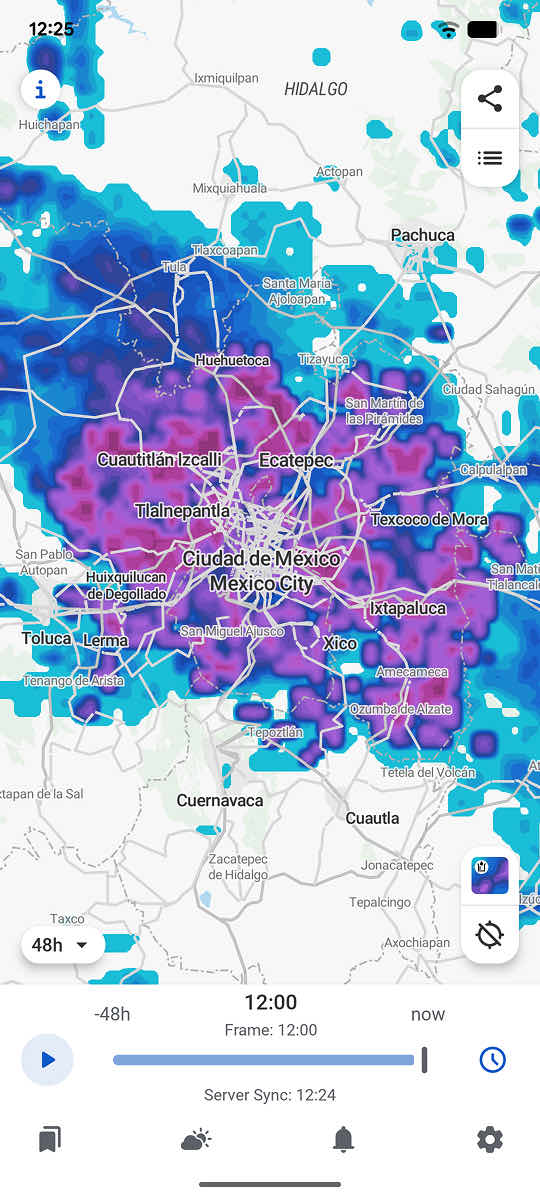
RainViewer shows the rain at your location in real time and up to 2 hours ahead. The map refreshes every 5 minutes, and you can also look back at the rain of the last 48 hours.
RainViewer animates the rain of the last 48 hours and shows the rain expected up to 2 hours ahead, refreshed every 5 minutes.
The season ends, the rain is still worth watching
Whether it is October or November, today’s rain map answers better than the calendar. Save your location and check before going out.



 RainViewer
