
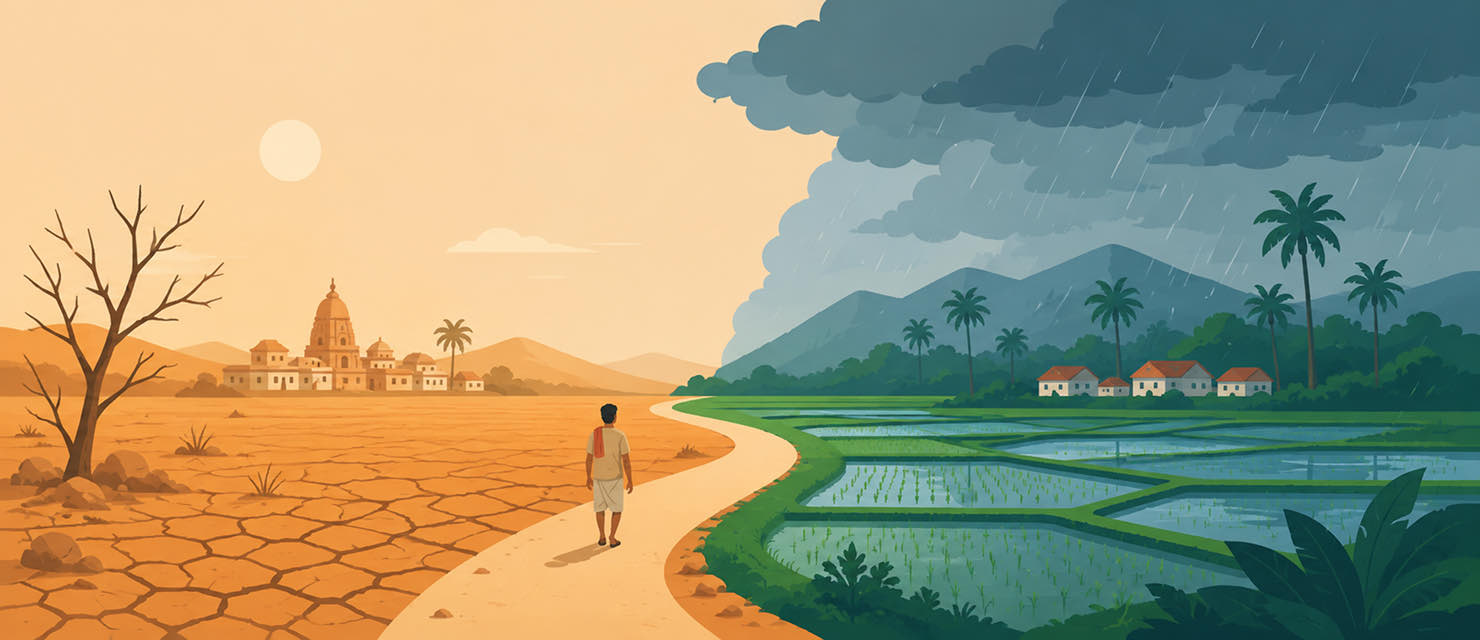
India receives 70 to 90% of its annual rainfall between June and September. India has a monsoon climate because the land heats faster than the surrounding ocean each summer, and that difference pulls moist ocean air onto the subcontinent.
What is a monsoon?
A monsoon is a seasonal reversal of prevailing winds. Air flows from ocean to land in summer and from land to ocean in winter, and the summer flow brings the wet season. The word comes from the Arabic mausim, which means season.
Step 1: The land heats faster than the ocean
During the northern summer, the Indian subcontinent and Central Asia heat far more than the Indian Ocean. Hot air rises, and pressure falls over the land. Air over the cooler ocean flows toward that low-pressure area and carries the moisture it picked up over the sea.
Step 2: The rain belt moves north
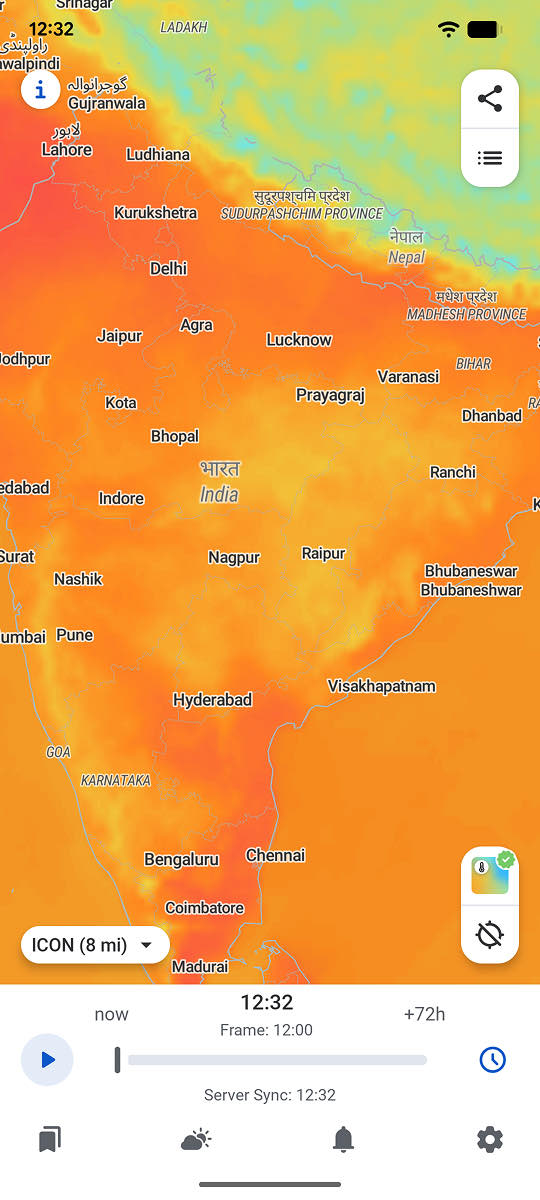
The Intertropical Convergence Zone is a belt near the Equator where winds from the two hemispheres meet and air rises, so rain concentrates there. In summer, it migrates north toward the Tropic of Cancer. That shift strengthens the low-pressure system over the subcontinent and pulls the monsoon flow in.
The southwest monsoon reaches Kerala in the first week of June and covers the whole country by early to mid July.
The monsoon flow reaches India in two branches. One crosses the Arabian Sea and meets the west coast. The other crosses the Bay of Bengal and moves over eastern and northeastern India. Both branches advance in surges, with wet spells followed by pauses, so the season is not one steady rain.
Step 3: The Tibetan Plateau adds heat at altitude
The Tibetan Plateau heats up in summer, and rising air above it meets the subtropical westerly jet stream. That interaction helps create the tropical easterly jet, which flows east to west across India and supports the southwest monsoon.
Step 4: Mountains decide where the rain falls
The Western Ghats force moist air upward along the west coast. The air cools as it rises, and the moisture falls as rain on the windward side. The Himalayas block the flow to the north and steer monsoon systems across northern India.
The same air produces very different rainfall depending on the terrain it meets.
When the monsoon leaves
The southwest monsoon withdraws from northwest India starting in September and continues through early October. The northeast monsoon begins around October 20 and lasts about 50 days. The retreating monsoon takes weeks, not days , because it withdraws region by region.
Why the monsoon shapes daily life
About 60% of Indians depend on agriculture for employment and livelihood, and more than half of India’s farmland is rain-fed. Agriculture makes up 17 to 20% of the country’s GDP.
The monsoon also decides where a trip is worth taking. See the best places to visit in India during monsoon for where the rain shapes the landscape.
Follow the rain as it happens
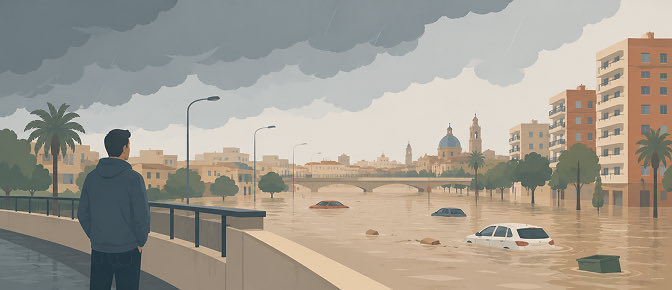
A season total does not say where it rained last night. RainViewer shows the monsoon on the radar map, updated every 5 minutes, with rain expected up to 2 hours ahead.
RainViewer shows how much rain fell at any location on the map, over any window from 1 to 48 hours back.


 RainViewer
