Hurricane Tracking Map
Tropical storms are areas of extremely low pressure on the earth’s surface. A tropical storm with a wind speed greater than 73 mph falls into the category of hurricanes. Severe hurricanes of category 2 and above can cause natural disasters and damage. Therefore, it is vital to identify them in advance and keep the situation under control. A live map of these natural phenomena would help to detect hurricane evacuation zones, provide warnings about disasters such as flooding, and contribute to public safety.
Active Hurricanes
Last updated:
| Name | Category | wind speed | moving |
|---|---|---|---|
 FAUSTO
 | Category 2 Hurricane | 130 km/h | W 23 km/h |
 GENEVIEVE
 | Category 5 Hurricane | 250 km/h | NW 21 km/h |
|
NOUL | Typhoon | 120 km/h | NW 17 km/h |
|
DOLPHIN | Super Typhoon | 65 km/h | W 29 km/h |
Our hurricane radar page enables you to track the movement of hurricanes and tropical storms on the map. To see where the current storm is heading, click the icon in the top-right corner of the map. You will see chains of colourful dots showing the past, current, and predicted path of a hurricane, cyclone, or tropical storm. The movement area forecast indicates a zone where a cyclone may travel, with the most likely path shown in the centre of the zone.
Different types of tropical storms are indicated with different colours on the map:
- Tropical Depression (<38 mph)
- Tropical Storm (39-73 mph)
- Category 1 Hurricane (74-95 mph)
- Category 2 Hurricane (96-110 mph)
- Category 3 Hurricane (111-129 mph)
- Category 4 Hurricane (130-156 mph)
- Category 5 Hurricane (157 mph or higher)
More in app
In the RainViewer app, you can dive deeper into upcoming tropical storms, from early formation to landfall and beyond.
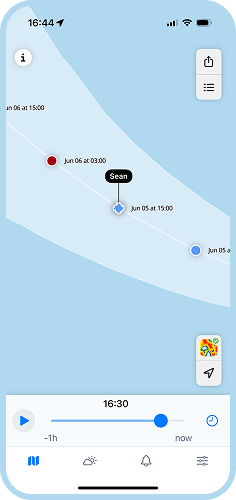
Storm Timeline
Track the storm’s entire journey. Tap any point along the path to view real-time wind speed, category, and direction. See where it began, how quickly it’s moving, and where it’s likely to strike next.
Storm Details
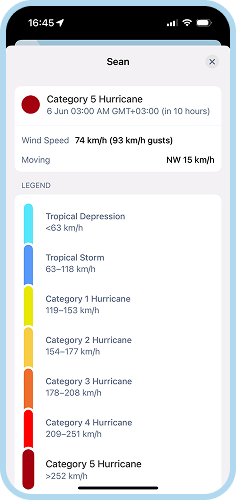
Category 1 or Category 5, you’ll know exactly what you’re dealing with. Decode intensity at a glance and decide whether it’s time to head to the cellar or simply secure the patio furniture.
Push Notifications
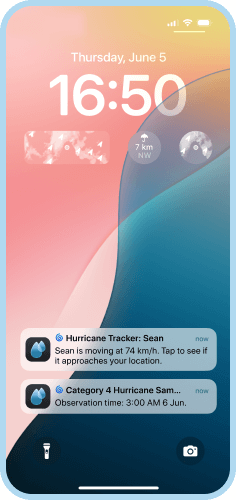
Receive notifications as soon as a storm approaches your area. Our alerts are timely, hyper-local, and designed to give you enough time to act - whether that means preparing or heading out.


Can a weather radar detect hurricanes?
When a hurricane is within approximately 325 km or 200 miles off the coast, a land-based weather radar can detect it. Such radars provide up-to-date data on rainfall intensity, tropical storm movement, and speed. As a result, the National Weather Service can issue short-term warnings for severe winds, tornadoes, and flooding in specific areas. Rain Viewer has access to data from over 1,000 radars worldwide. This enables us to deliver the most accurate information about current cyclones and hurricanes, updated in real time.
How do I track a hurricane on a map?
To track a hurricane on our map, you should enable the tropical storm tracks. To do this, click the icon in the top-right corner. This will display chains of dots in different colours, representing the scale of the tropical storm. The name of the current hurricane points to the dot marked with the colour that currently corresponds to its type. In the Rain Viewer app, you can tap the hurricane's name to get more details about it.
 RainViewer